What happens when the rules we’ve relied on to plan events no longer reflect how people actually behave?
Audiences are registering later, expecting more personalized experiences, and finding new reasons to attend in person. At the same time, organizations are looking for clearer evidence of the value their events deliver.
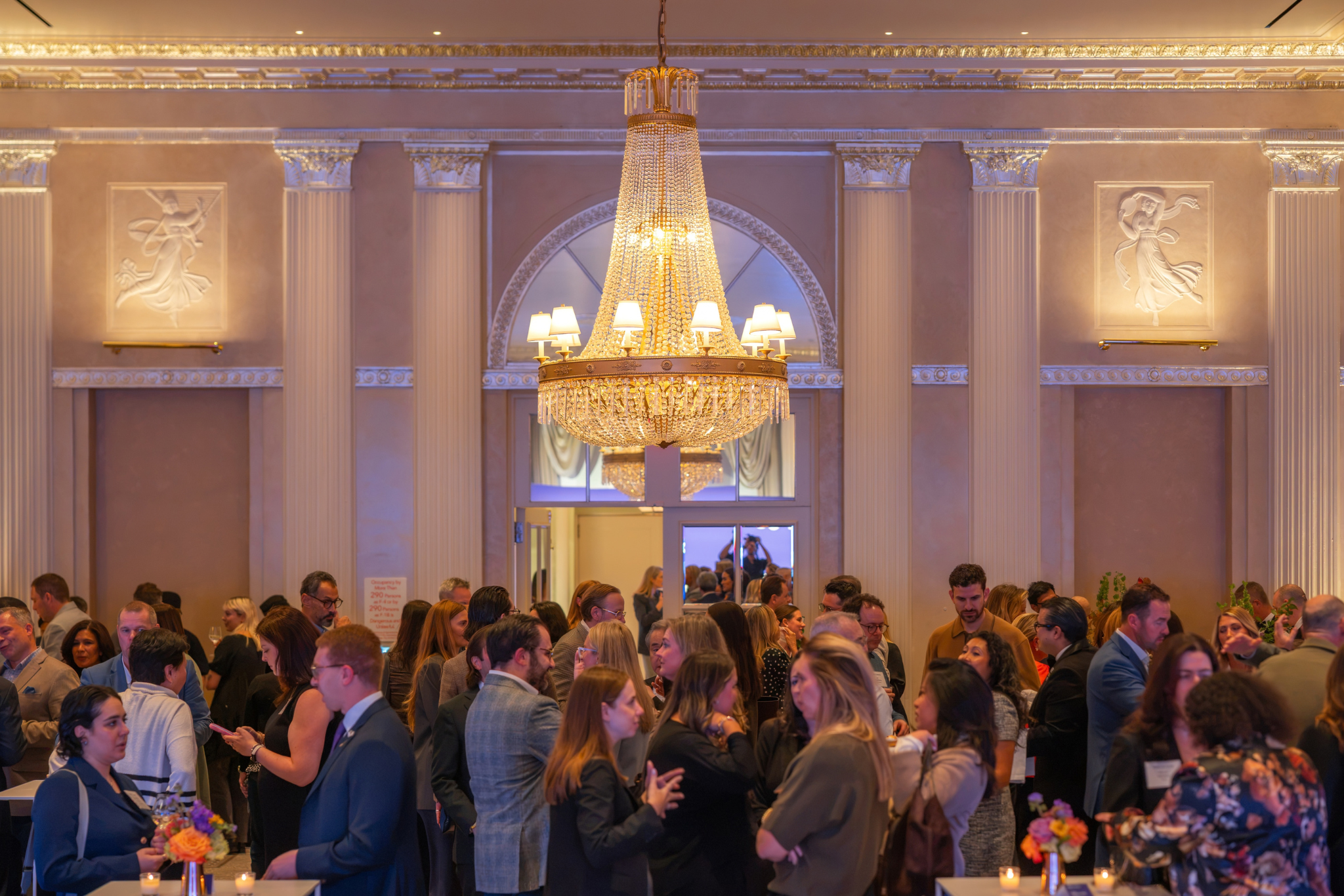
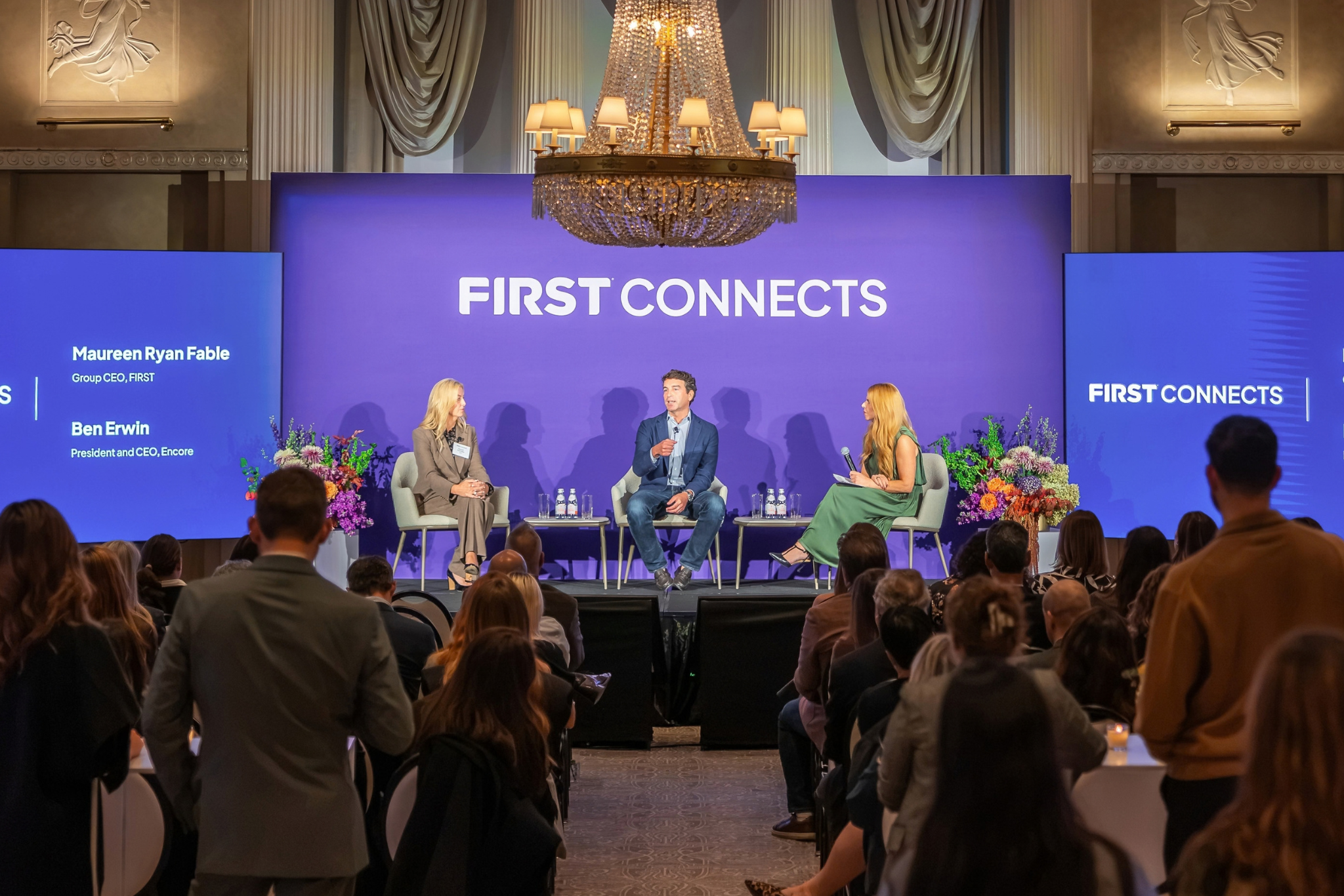
These were among the questions explored at a special edition of FIRST Connects on October 7, hosted at the Waldorf Astoria New York in celebration of 30 years of FIRST.
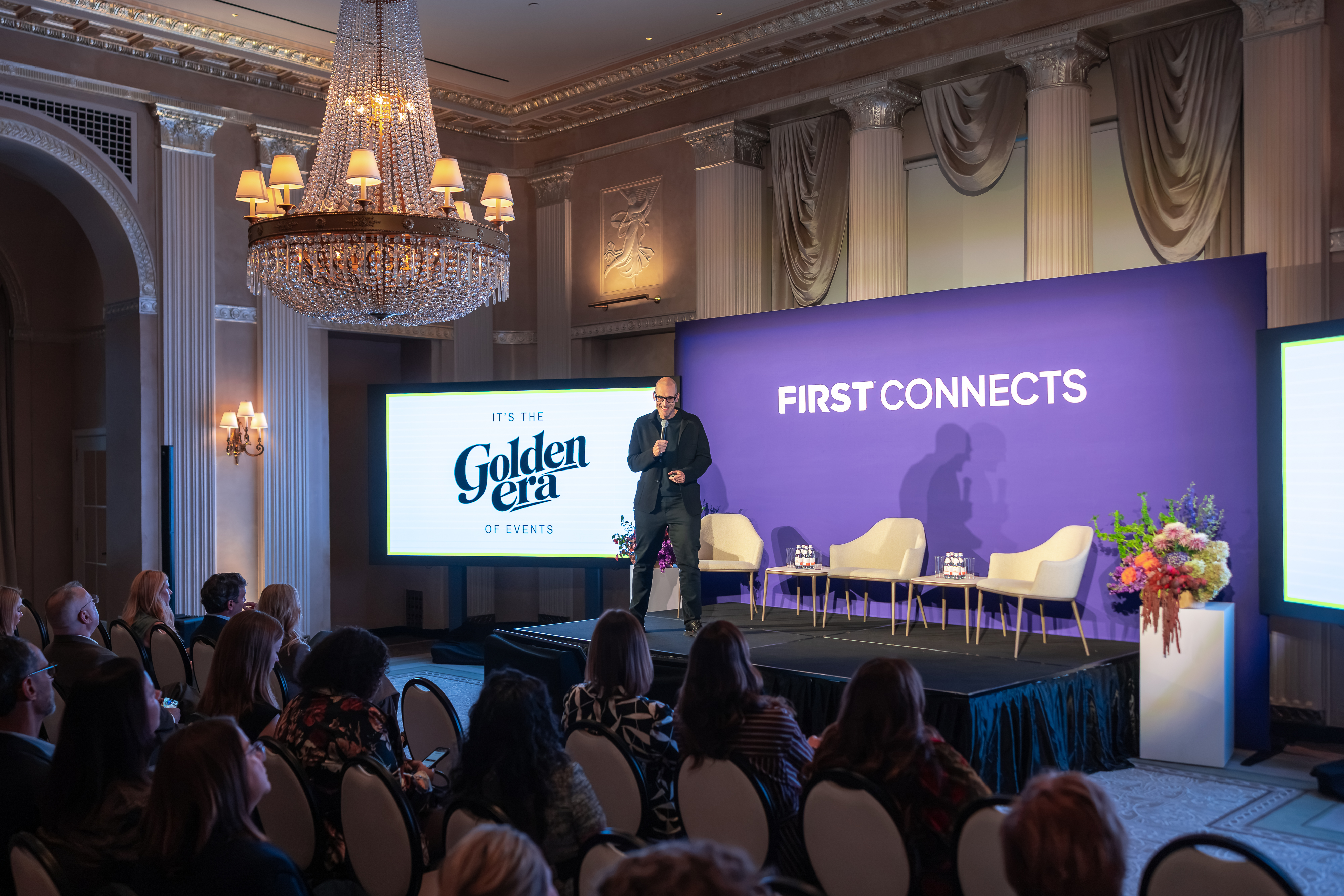
The evening brought together clients, partners, and industry leaders for a conversation between Maureen Ryan Fable, CEO of FIRST, and Ben Erwin, President and CEO of Encore, moderated by Jennifer Kauf. In a thought-provoking keynote, event industry speaker and entrepreneur Julius Solaris challenged familiar assumptions about live experiences, from how we design for connection to what we measure and why.
Here are five ideas from his keynote that challenge some familiar assumptions about events.
Are we overplanning content and underplanning connection?
For years, event agendas have largely been built around content: keynotes, breakout sessions, workshops, and presentations. But what if content is no longer the biggest reason people attend?
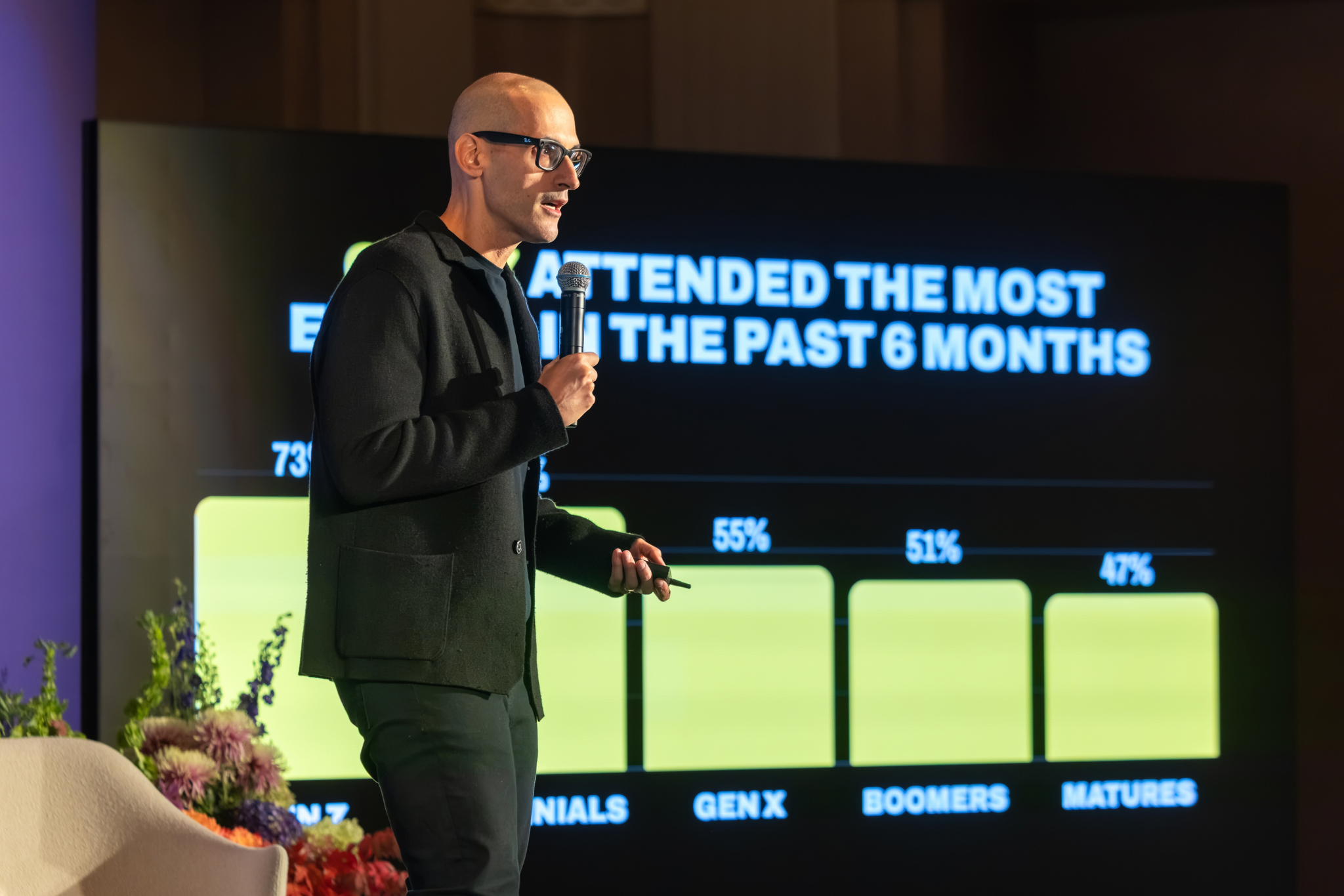
During his keynote, Julius shared research highlighting a shift toward connection as a primary motivator for event attendance. As access to information becomes easier, the value of being in the room increasingly comes from the people you meet and the conversations you cannot replicate online.
That raises an interesting challenge for event organizers. We spend considerable time designing content schedules, but are we giving networking and relationship-building the same attention?
Julius pointed to the rise of smaller gatherings, side events, and informal conversations as examples of how attendees are finding value beyond the main program. The opportunity is not necessarily to add another networking reception. It’s to consider how an entire experience can encourage connection through thoughtful spaces, smaller group interactions, and moments that make it easier for people to start conversations.
The question to ask: If connection is one of the main reasons people attend, where are we making space for it to happen?
What happens when attendees stop planning ahead?
Late registration is becoming a planning challenge that event teams cannot afford to ignore. Julius discussed how younger audiences are making decisions much closer to an event date, creating a disconnect between traditional planning timelines and actual attendee behavior.
That change has implications far beyond registration numbers. Event teams often commit to venue space, catering, accommodation, and production requirements long before final attendance becomes clear. Marketing teams need to keep communicating value to prospective attendees much later in the planning cycle.
During audience Q&A, Julius challenged the industry to reconsider whether familiar registration practices and contractual timelines still make sense when attendees decide closer to event day.
The takeaway isn’t that every event needs to operate at the last minute. It’s that flexibility needs to be considered earlier in planning—from forecasting and supplier conversations to registration communications and attendee management.
The question to ask: Are our planning processes built around how attendees behave today, or how they behaved five years ago?
Does the keynote need to look like a keynote?
A speaker walks onto a stage. A presentation appears behind them. The audience listens. It’s a familiar format, but familiarity doesn’t always create engagement.
Julius challenged attendees to reconsider the traditional keynote experience, sharing examples of organizations taking a more creative approach to presenting information.
One example was a technology company that adapted the popular Hot Ones interview format for a conversation with its CTO, making a technical discussion more entertaining and accessible. Another involved transforming a panel discussion about sustainability into a game-show-style experience.
These examples weren’t simply about making presentations more theatrical. They demonstrated how format can change the way audiences engage with information.
Julius also discussed the importance of authenticity, including the value of live moments that don’t go exactly as planned. In an environment where so much content is polished, edited, and available on demand, there is something distinctive about watching an experience unfold in real time.
Not every speaker needs to perform a musical number or participate in a game show. But every session can benefit from asking whether its format serves its message.
The question to ask: If we designed this session from scratch today, would we still put someone behind a lectern for 45 minutes?
What’s the ROI of a puppy?!
One of the more memorable moments of Julius’ keynote involved a surprisingly familiar event activation: puppies.
Puppy lounges, branded giveaways, and interactive installations can draw crowds and generate social content. But what makes them successful?
Julius used the example to challenge how event organizers measure value, moving the conversation beyond return on investment (ROI) to include return on objectives (ROO) and return on emotions (ROE).
A popular activation might attract hundreds of attendees. But that number tells only part of the story. Did those interactions help achieve a business objective? Did participants leave with a more positive impression of the brand? Did the experience create something meaningful enough to influence future behavior?
Julius’ point was a useful reminder that an engaging experience and an effective experience aren’t necessarily the same thing. Clear objectives help teams understand what worked, what mattered to attendees, and what to improve next time.
The goal isn’t to make every human interaction transactional. It’s to be more intentional about what an experience is designed to accomplish and how its value will be understood.
The question to ask: Are we measuring the impact of an experience, or simply counting how many people participated?
Are we ready to rethink th familiar?
There is no single change reshaping live experiences. Audience behavior, expectations of value, and the ways people engage with content are evolving together.
Across his keynote, Julius returned to an important challenge for event professionals: familiar formats and processes may no longer reflect what audiences actually want from an experience.
A packed agenda does not automatically create connection. A polished keynote does not guarantee engagement. A popular activation does not necessarily demonstrate impact.
The opportunity is to revisit each assumption with more curiosity: What behavior are we designing for? What experience will feel distinctive? And what evidence will tell us it made a difference?
Taken together, Julius’ examples offer a practical invitation to challenge the playbook rather than repeat it by default.
The question to ask: Which part of our event playbook would we redesign if we were starting from scratch today?
30 years in. Still looking forward.
The formats, technologies, and expectations surrounding live experiences will continue to change. The challenge is recognizing when established approaches need to evolve.
Julius’ keynote offered a chance to question familiar assumptions and consider how event professionals can design more relevant, engaging, and measurable experiences.
As FIRST marks 30 years, it’s a meaningful moment to reflect on the partnerships and experiences that have shaped our journey, while continuing to challenge ourselves to think differently about what comes next.
Thank you to everyone who joined us at the Waldorf Astoria New York and contributed to the conversation.
Engage with FIRST