Intimacy at Scale: The “Holy GrAIl” of Modern Experiences
We Have Mastered Reach
But creating a connection is harder than ever.
As content volume increases, what cuts through isn’t more – it’s something that feels intentional, relevant, and human.
For years, marketers and event teams have been chasing the same idea: How do you make something feel personal at scale?
It’s not a new concept. Personalization has been a part of the conversation for decades. But actually delivering something that feels thoughtful, relevant, and human across hundreds or thousands of people has always been the challenge. That’s what we mean when we talk about “intimacy at scale.” And increasingly, it feels like we’re getting closer to it.
We’ve Mastered Reach, But Lost Touch
Reaching people isn’t the problem anymore. With the tools we have today, we can reach anyone, anywhere, at any time. The volume of content we are exposed to is constant–emails, notifications, ads, messages–all competing for attention.
But most of it blends together.
Because while we’ve become incredibly effective at reaching people, we haven’t always maintained the sense of connection that makes something actually resonate. When communication is overly automated, scheduled, and optimized, it can start to feel generic, and people do take notice.
In fact, 61% of customers say they feel treated like numbers rather than individuals, while expectations for more tailored, thoughtful experiences continue to rise. In that kind of environment, producing more content isn’t what cuts through. What does is something that feels considered.
Intimacy Isn’t About Knowing Everything
When personalization comes up, the conversation often turns to data. To achieve personalization, we often think we need more signals, more inputs, and more tracking.
The brands that do personalization well aren’t trying to know everything. They focus on understanding what actually matters, and then designing around it. Because intimacy isn’t about knowing everything. It’s about learning what the right things are, and then caring deeply about them.
You see it in the experiences that people genuinely engage with: Spotify Wrapped turning listening data into something personal and shareable, Netflix subtly adapting visuals based on viewing behavior, or Coca-Cola putting your name on a product. None of these are overly complex, but they feel intentional to the end user, and that’s what makes them work.
Where AI Changes the Equation
The challenge with personalization has never been a lack of ideas; it has been execution. Delivering that level of detail and responsiveness at scale has traditionally required an unsustainable amount of manual effort.
That’s where AI starts to shift things.
Not because it replaces human thinking, but because it allows the team to process more information, respond in real time, and adapt experiences dynamically. It enables scaling something that was previously limited.
In practice, this shows up in two ways. Sometimes AI enhances what already exists, making systems more responsive and efficient. Other times, it becomes the foundation for entirely new types of interactions. Both approaches are important, and together they start to unlock what intimacy at scale can actually look like.
What Intimacy at Scale Looks Like in Practice
The idea becomes clearer when you look at how companies are already applying it.
EXAMPLE 1: Removing Friction to Create Better Experiences
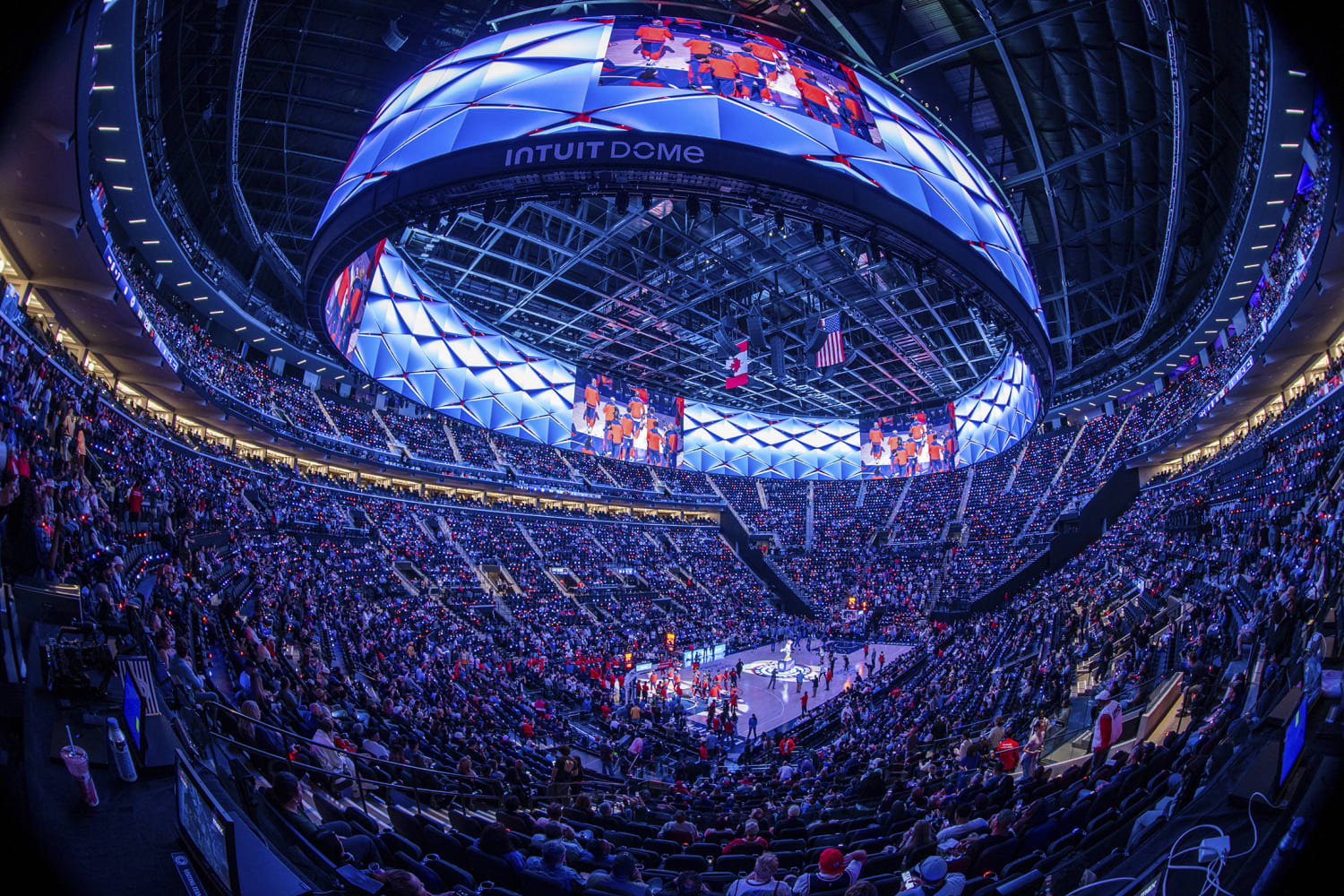
At the Intuit Dome in Los Angeles, the goal wasn’t just to personalize the customer experience, but to eliminate friction entirely.
Using AI-powered systems, the arena can:
Recognize fans as they arrive
Streamline entry with no tickets or queues
Enable check-out for free purchases
Tailor in-seat content and promotions in real-time
While the result was increased efficiency, the experience as a whole feels effortless and responsive, shaping itself around the individual without requiring constant input from them.
EXAMPLE 2: Respecting Time as a Form of Personalization
At Cisco Live 2025, AI was used to analyze participants’ movement patterns, session capacity, and queue data. This enabled the event to observe in real time and make changes, such as adjusting room allocations, reducing wait times, and sending personalized alerts to attendees.
On the surface, this looks operational, but the impact is much more human. For high-value audiences, respecting someone’s time is one of the clearest ways to show respect.
EXAMPLE 3 – Scaling Real Conversations, Not Just Leads
At large B2B events, capturing leads is easy. Understanding them is not.
Typically, badge scans are collected, pushed into a CRM, and followed up with generic outreach — “Great to meet you at our booth.” It’s efficient, but it’s not meaningful. Matillion approached this differently.
Instead of relying on basic lead data, they used AI to process booth staff notes and capture the nuance behind each conversation.
These insights were then combined with external context, such as recent company activity, to create a more complete picture of each prospect.
The result wasn’t just better data, but better conversations. Sales teams were equipped with tailored talking points for every lead, allowing them to engage in a way that felt informed and relevant.
AI didn’t just scale their outreach. It scaled their ability to listen.
The Real Shift
What this really points to is a shift in mindset.
For a long time, the focus has been on producing more, adding more content, more touchpoints, and more interactions. But that’s not what moves the needle anymore. The real opportunity is to understand better and design experiences that respond in real time, remove unnecessary friction, and focus on what actually matters to people.
Because ultimately, scaling intimacy isn’t about doing more. It’s about doing what matters more.
We’re not fully there yet, as there are still real constraints, like budgets, systems, data, and the realities of execution. But the gap between what we want to deliver and what we can deliver is actually getting smaller. And for the first time, intimacy at scale feels less like an idea and more like something we can actively design toward.
For teams thinking about the future of events, marketing, and experiences, the question is shifting. It’s no longer “Can we personalize this?” It’s “How do we make this feel more human?” Because in a world where everything is scalable, automated, and optimized, the experiences that stand out will be those that feel intentional.