Key Insights from Canva’s AI Vision Event in NYC
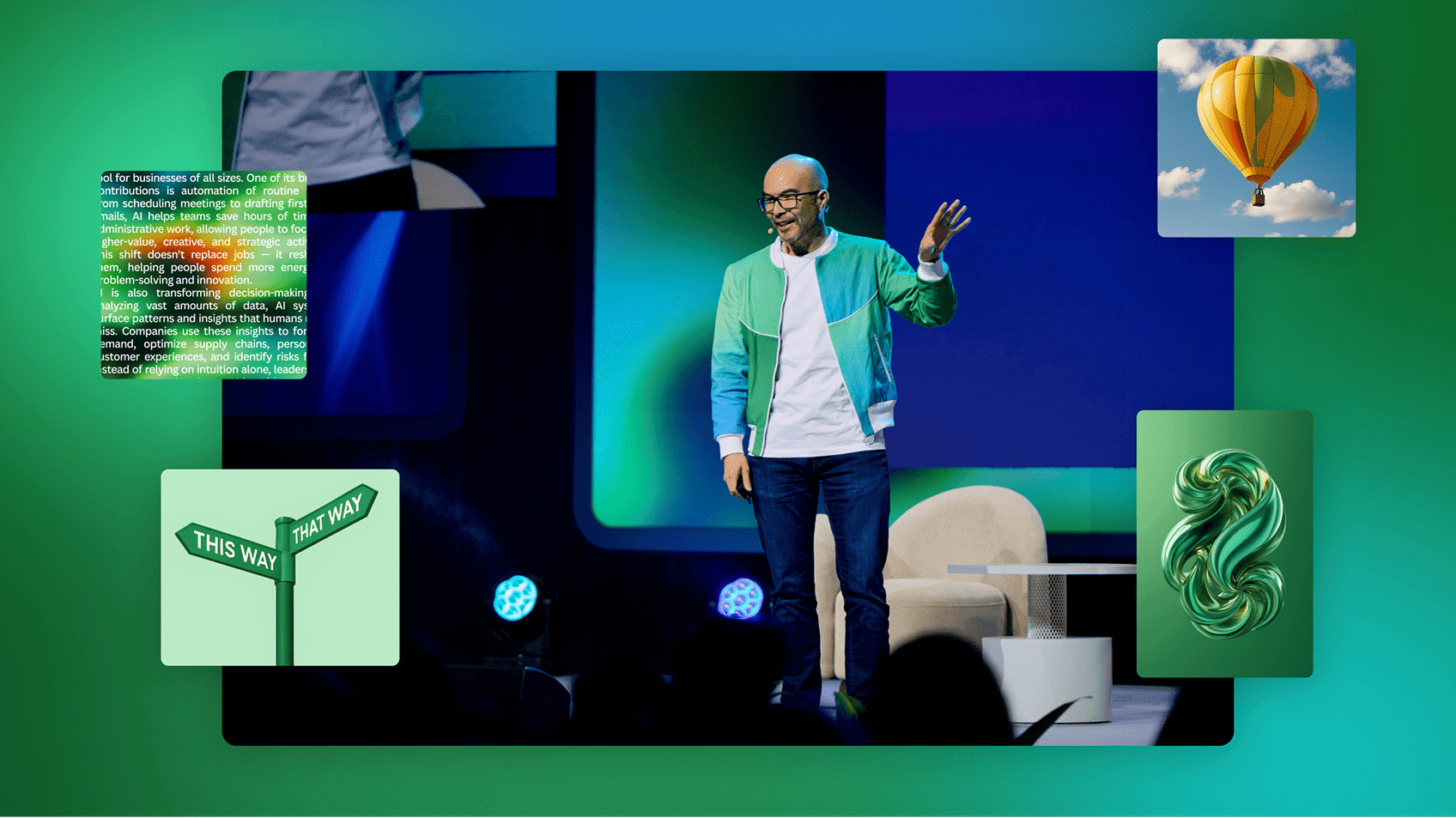
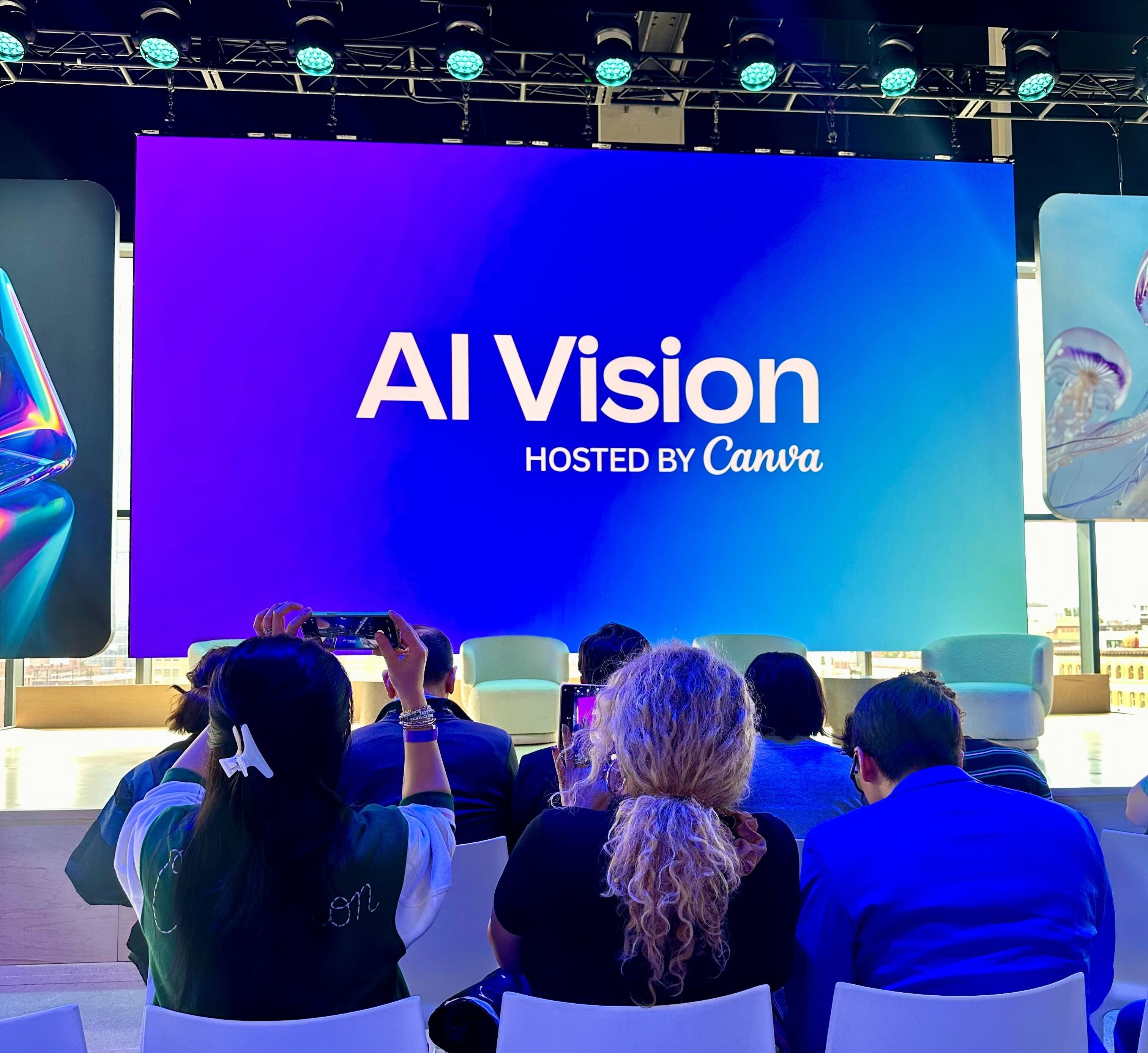
Members of the FIRST marketing team, George Paraskevas and Ananya Gupta, recently attended Canva’s AI Vision event in NYC, where leaders from OpenAI, Anthropic, Runway, and other top companies gathered to explore one key question:
Where is AI actually taking creativity, companies, and careers?
The answer wasn’t about replacing people. It was about amplifying what people can do. Across panels and keynotes, one theme kept coming up: the most significant impact of AI won’t just be speed–it will be imagination.
Here are the most important ideas shaping the next decade of creative work.
1. AI Has Shifted from Experiment to Everyday Workflow
Not long ago, AI felt like something you experimented with. You’d try a prompt, test a feature, maybe generate an image or two. Now, for many people, it’s simply part of the workday.
Millions start their mornings by interacting with AI assistants, asking them to help draft emails, structure strategies, analyze research, or generate creative assets. AI is no longer just a tool people occasionally use; it’s quickly becoming a collaborator in everyday decision-making.
In many ways, this moment feels similar to other major technology shifts, such as the arrival of the internet, smartphones, and social media. The difference this time, however, is speed. According to OpenAI, the internet took about seven years to reach 100 million users. Facebook did it in four years. ChatGPT reached the same milestone in just two months.
The takeaway is clear: AI isn’t just another tech trend. It’s a platform shift that’s unfolding faster than anything we’ve seen before.
2. The Real Challenge: Balancing Efficiency and Expertise
One of the most thought-provoking ideas from the event came from AI researcher Dr. Sandra Peter. She described the age of AI as a balancing act. On one side, generative AI can dramatically improve productivity. Some estimates suggest that it can increase efficiency by more than 60%.
But there’s another side to the story. If people begin outsourcing too much thinking to AI, there’s a risk that could erode over time.
Dr. Peter described this tension as a “tightrope walk” between efficiency and expertise.
Some organizations are already seeing early signs of this dynamic. Senior talent, equipped with AI tools, can suddenly move much faster and produce more work. But at the same time, junior employees may miss opportunities to build greater skills if AI is doing too much of the heavy lifting.
The key takeaway?
Companies need to design workflows that augment human thinking rather than replace it.
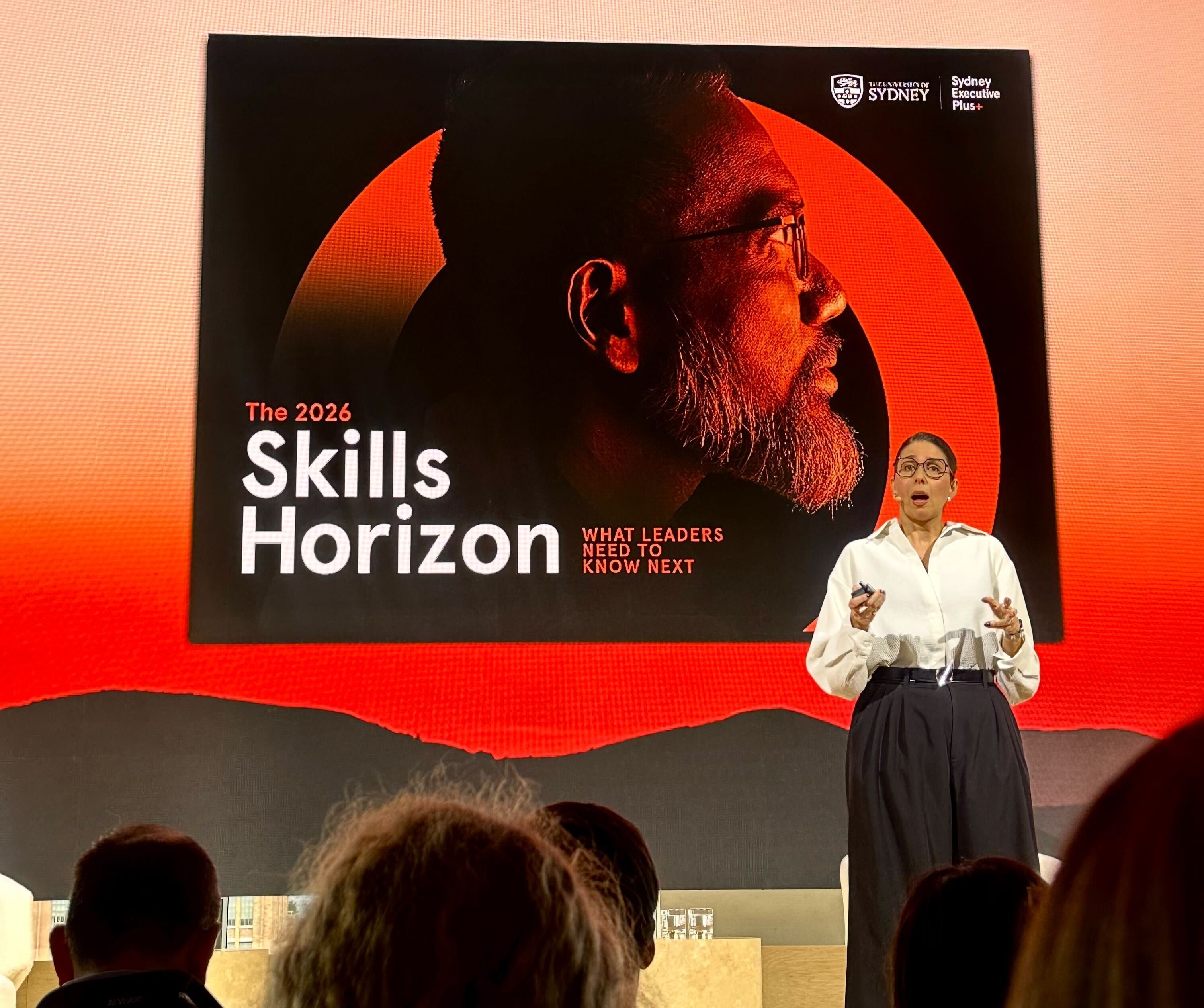
3. The AI Products That Succeed Won’t Feel Like AI
Another panel discussion, featuring leaders from Canva, Anthropic, and Clay, explored an important question: What actually makes AI usable?
The answer was surprisingly simple.
The best AI products don’t constantly remind you that they’re AI. Instead of flashy demos or “sparkle icons,” the most effective AI tools quietly embed themselves into existing, everyday workflows. They help people move faster without forcing them to learn an entirely new way of working.
Think about:
- AI summaries that automatically surface key insights
- AI copilots embedded inside familiar software
- AI recommendations that appear before you even think to ask
When this works well, people stop thinking of the feature as “AI.” It just feels like good software.
4. The Creator Economy is About to Explode (Again)
If the creator economy already feels massive, AI may accelerate it even further.
According to Later’s Chief Product Officer, Lyle Stevens, the number of creators globally quadrupled during the pandemic. Looking ahead, projections suggest that more than one billion people could earn money from their passions by the end of the decade. AI is playing a huge role in lowering the barrier to entry.
One example shared at the event was Granny Spills, a fully AI-generated social media personality. The account launched in July 2025 and grew to 1.9 million followers in less than a year.
In the near future, we’ll likely see a mix of:
- AI-assisted creators
- AI-generated influencers
- AI-augmented storytelling
Brands that learn how to collaborate with this new creative ecosystem early will have a significant advantage.
5. The Biggest AI Mistake Companies are Making
When companies start exploring AI, they often focus on one question first: Which model should we use?
But several speakers suggest that this is the wrong place to start. In reality, the biggest challenge isn’t choosing a model, but preparing the data infrastructure that powers it.
Many AI projects struggle not because the technology is flawed, but because the underlying data is messy, disconnected, or difficult to access. Speakers referred to this challenge as the “plumbing problem.” Without strong foundations–clean data, integrated systems, and accessible knowledge–even the most powerful AI tools will struggle to deliver results.
As one panelist summarized:
“The winners won’t be the companies with the best models. They’ll be the companies with the best data supply chains.”
In other words, AI isn’t just a technology problem. It’s an organizational design challenge.
6. The Most Valuable Skill in the Age of AI
Toward the end of the event, Runway CEO, Alejandro Matamala-Ortiz offered a powerful reframing of the AI conversation.
Throughout history, he argued, breakthrough innovations rarely came from tools alone. They came from people asking new questions about what those tools could do.
- For example, The Lumiere brothers used early film cameras to record reality.
- Filmmaker George Méliès asked a different question: What if film could show things that don’t exist?
In the age of AI, the same principle applies. The people who thrive won’t necessarily be those with the most advanced tools; they’ll be the ones asking the most interesting questions. He called this the “What If” mindset.
Questions like:
- What if anyone could become a filmmaker?
- What if storytelling had entirely new formats?
- What if design tools generated fully editable creative systems?
These questions shape innovation. Technology simply makes them possible.
7. The Future of AI is Human-Centered
Despite all the hype surrounding artificial intelligence, one theme remained consistent throughout the event: AI isn’t about replacing humans, but about expanding what humans are capable of.
At its best, AI can:
- Accelerate imagination
- Remove tedious work
- Amplify creativity
- Help people make better decisions
Or as one speaker summarized:
“Productivity without direction doesn’t multiply – it amplifies.”
AI may make us faster, but humans still decide where to go.
The Real Opportunity Ahead
If the past few years have been about discovering AI, the next decade will be about designing with it.
Organizations will need to rethink:
- How teams collaborate
- How creative tools fit into everyday workflows
- How leaders build trust in AI systems
- How people develop taste, judgement, and imagination
Because the biggest shift ahead isn’t purely technological; it’s cultural, and the people who thrive won’t simply be the ones who use AI. They’ll be the ones asking the boldest question of all: What if?
Engage with FIRST