The conversation touched on everything from shifting attendee expectations to the future of hospitality and real estate.
Here’s a quick look at the insights and ideas shaping what comes next.
1. The Revival of Live Experiences: Prioritizing Human Connection
“We’ve heard so many conflicting headlines, some say the industry is slowing, others that demand is strong. How would you describe the health of the industry todIn a world increasingly driven by virtual communication, the value of in-person gatherings has never been higher, but the purpose of these events has shifted profoundly.
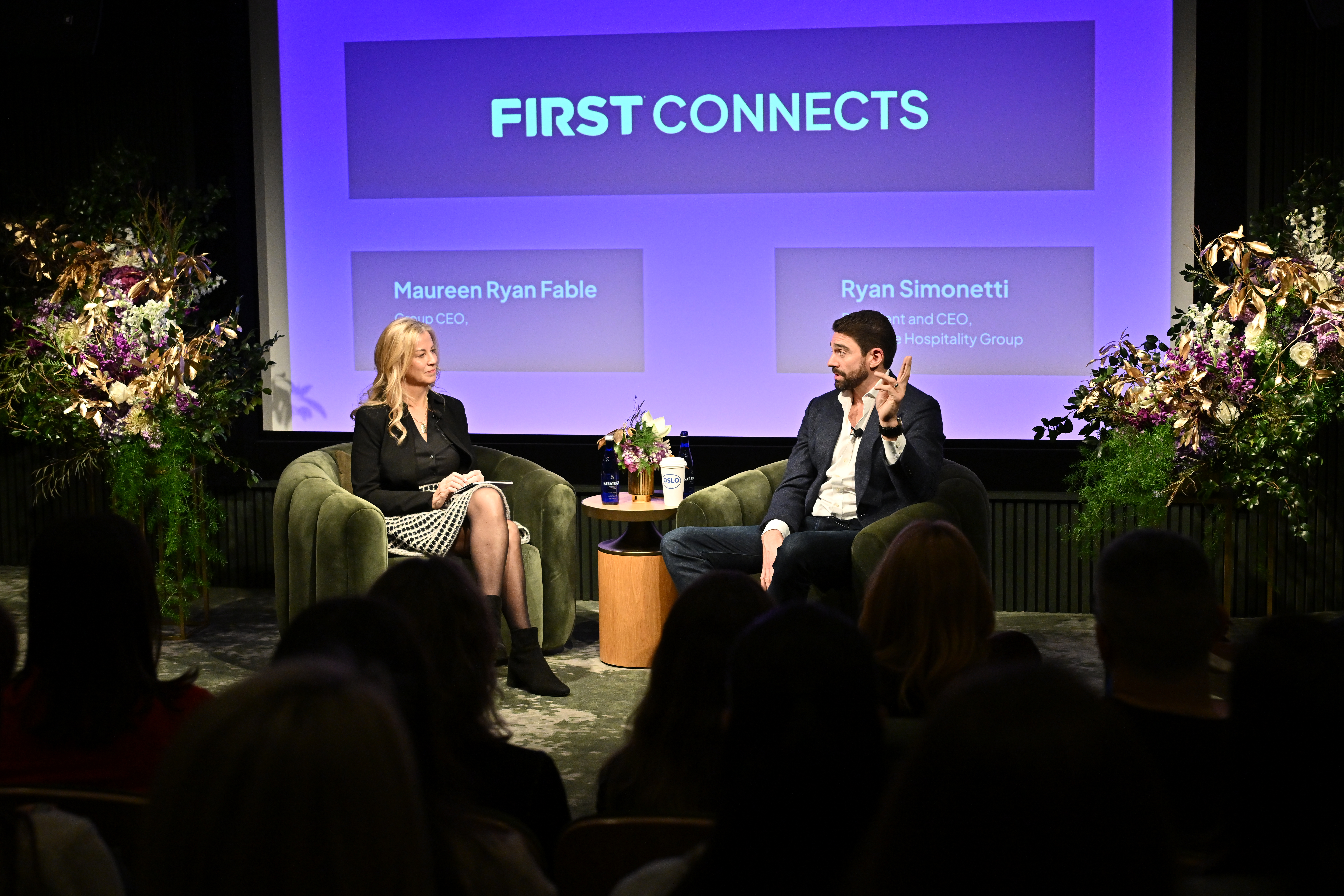
Ryan Simonetti argued that we are entering a renaissance for live experiences, fueled by a growing desire for community and authenticity in a digitally saturated world. This trend requires a fundamental shift in how we measure success.
- Humanity as the Counter-Trend: The demand for genuine human-to-human connection is a direct counter-trend to the prevalence of technology and AI. Event design must prioritize creating moments of community and authenticity that digital platforms simply cannot replicate.
- Measure Return on Experience (ROX): Event success is moving beyond traditional Return on Investment (ROI) to focus on Return on Experience (ROX). Highly unique, differentiated, and high-impact events are necessary to motivate attendance. If an event is not strategically essential or exceptionally well-designed, attendees will opt out.
- The Culture Engine: Corporate events are increasingly being used as a critical tool to drive organizational culture and reinforce human capital strategy. For hybrid or dispersed teams, in-person gatherings are the essential moments of alignment, collaboration, and relationship building.
2. Structural Shifts: How to Master the New Event Calendar
The way clients plan and execute events has changed in a big way, bringing new challenges, new opportunities, and a whole new rhythm to booking windows and event design. These shifts aren’t just a moment; they’re the new normal for our industry.
- Shorter Programs, Higher Complexity: The average corporate conference has shrunk from nearly three days to often just one and a half days. This compression means planners must fit high-impact content into a shorter format. For venues and production teams, this creates significant operational complexity, requiring high-speed setup and higher labor demands to constantly transform spaces.
- New Seasonality: Buying patterns have shifted, resulting in a loss of approximately 30 “bookable days” since the pandemic. Weeks adjacent to holidays and major breaks are now avoided, compressing demand into fewer, highly competitive peak dates.
- Peak Date Scarcity: Clients must commit to a multi-year calendar now. Ryan warns that peak dates in flagship venues in markets like New York and London are already disappearing for next year.
- Consolidation of Spend: Companies are prioritizing their budgets, choosing to do less, but better. Event consolidation means clients are opting to eliminate smaller, less strategic gatherings to go “all in” on the quality, production, and experience of their most vital events.
3. Technology and AI: The Shift From Tool to Workflow
The integration of technology and AI is no longer a question of if, but how. The focus is shifting from using technology as a standalone feature to embedding it directly into event workflows, unlocking productivity.
A Simple AI Framework:
- Ryan provided a simple yet powerful framework for leaders to consider AI’s application in their business, breaking it down into three distinct layers.
- Information: Using AI for rapid, simple access to information that speeds up research and decision-making.
- Automation: The immediate and most powerful application: using AI agents to automate manual, repetitive tasks. This doesn’t replace the human planner, but rather frees them to focus on strategic and creative tasks, driving up overall productivity.
- Intelligence: The speculative layer—whether AI can truly replicate the creativity and strategic brain of a human being.
The Digital and Physical Foundation:
The success of both AI integration and high-end event delivery relies on solid infrastructure.
- Venue Architecture: Venues are modernizing by replacing older, monolithic AV and networking systems with open, decentralized microservices. This design is crucial for seamless hybrid execution, minimizing the risk of a single point of failure, and facilitating complex, high-end production.
- The Data Prerequisite: For event organizations, the commitment to AI begins with Master Data Management (MDM). A clean data infrastructure is the non-negotiable prerequisite, as unreliable input leads to unreliable results—the simple rule of “junk in, junk out” remains the ultimate constraint for AI effectiveness.
Final Thoughts
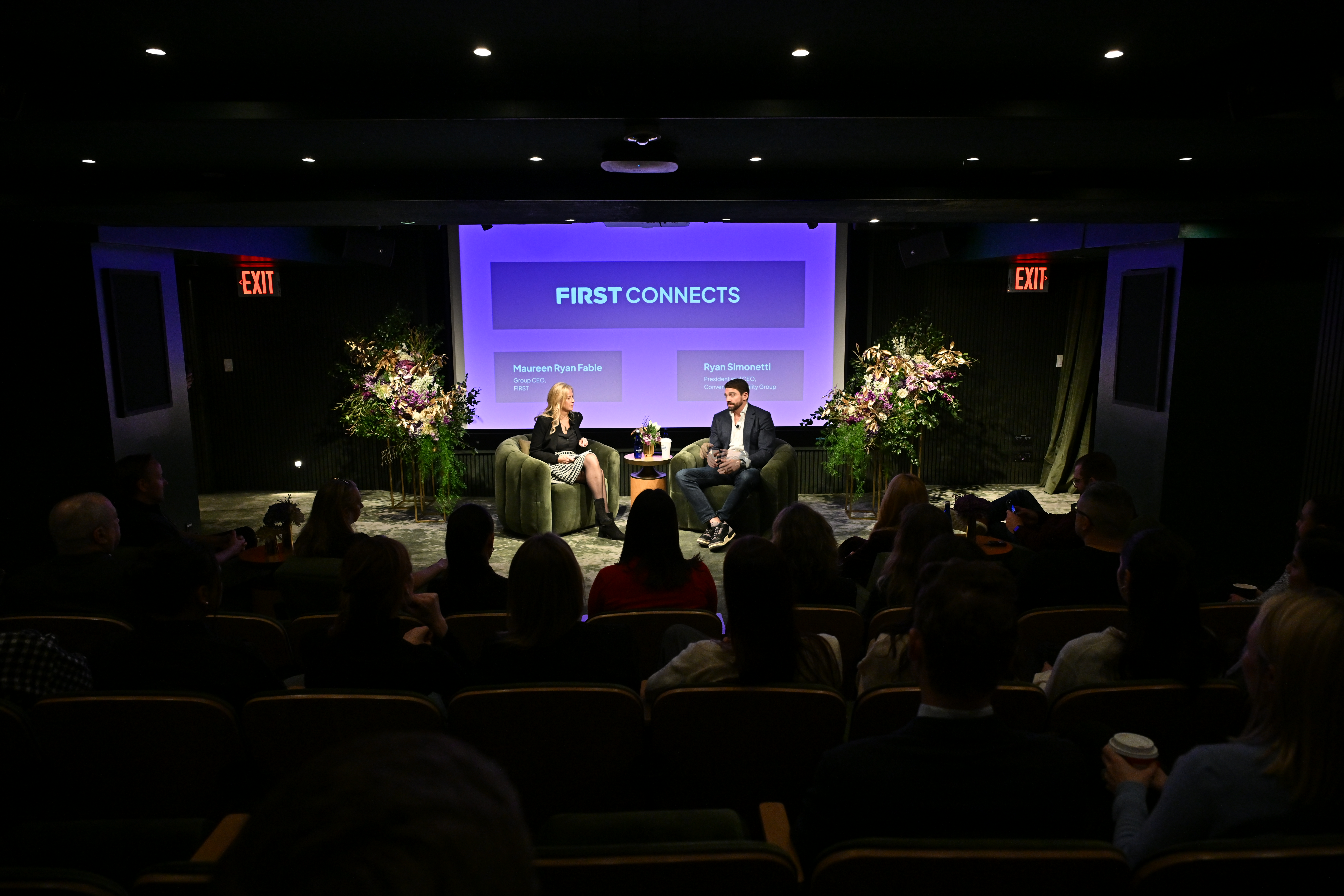
Maureen Ryan Fable and Ryan Simonetti left the audience with a clear message: The future of the meetings and events industry is vibrant and optimistic when driven by teams who are strategic, data-driven, and prioritize meaningful human connections.
We look forward to continuing these conversations and hope to see you at our next FIRST Connects event.
Engage with FIRST